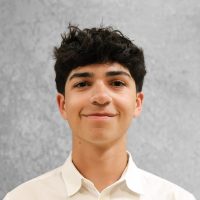
President



Internal Vice President


External Vice President - Local Affairs

External Vice President - Statewide Affairs



Student Advocate General

International Senator

Transfer Senator


On Campus Senator

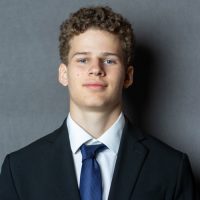
Off Campus Senator












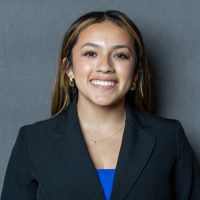


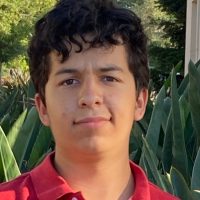
University Owned Off-Campus Senator


Collegiate Senator - Letters & Science
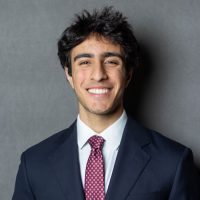

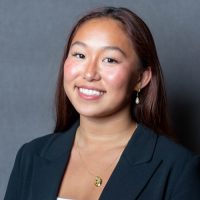
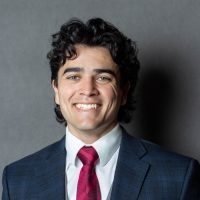

Collegiate Senator - Engineering
Collegiate Senator - Creative Studies

-
(The following text is not final. Approvals and edits may still occur before the election begins.)
-
Article VI, Section 2 – Amending the A.S. Senate’s Size and Senator Constituency
Amending the A.S. Senate’s size and Senator Constituency – Article VI, Section 2
This policy change would amend Article VI, Section 2 of the A.S. Constitution regarding the size and constituency of the A.S. Senate.
This policy removes and replaces the residential Senator positions that represent on-campus, off-campus, and University Owned Housing. These 18 positions will be replaced by 8 Senator-At-Large positions. This policy will also increase the number of Transfer Student Senators from 1 to 2. This will lower the total number of Senate seats from 27 to 20 total.
A “YES” vote means the A.S. Senate size and Senator positions will change beginning with the 2027-2028 election cycle.
A “NO” vote means the A.S. Senator positions remain the same.
Do you approve of the amendments of Article VI, Section 2 as follows:
Changes identified in bold
ARTICLE VI- LEGISLATIVE DEPARTMENT BRANCH
SECTION 1. LEGISLATIVE AUTHORITY
The Legislative Authority shall be vested in the Senate, which shall be the supreme policy-making body of the Associated Students and shall promote the welfare and interests of the Members of the Associated Students, subject to the limitations herein enumerated.
SECTION 2. MEMBERSHIP
-
- The voting members of the Senate shall be defined as the total number of the elected Representatives of the Associated Students. Each Senator shall be elected by a plurality of their respective constituencies.
The Presiding Officer of the Senate may vote only to break a tie vote.The Internal Vice President shall serve as President of the Senate, and may vote only to break a tie vote.
- A First Presiding Senator Pro-Tempore and Second Presiding Senator Pro-Tempore shall be nominated by the Internal Vice President and approved by a two-thirds (2/3) majority of the voting membership of the Senate by the second (2nd) regular meeting following the installation of officers and may vote in all matters.
- The line of succession for the Presidency
Presiding Officeof the Senate shall be the First Presiding Senator Pro-Tempore followed by the Second Presiding Senator Pro-Tempore.
SECTION 3. DISTRIBUTION OF ELECTED REPRESENTATIVES
Residential Senators
The distribution of the residential senators shall be based upon a fixed number of senators representing each constituency.
Five (5) On-Campus Senators shall represent undergraduate students residing in university residence halls.
Twelve (12) Off-Campus Senators shall represent undergraduate students residing off-campus.
One (1) University Owned Housing Senator shall represent undergraduate students residing in university owned housing.
- Senators-At-Large
- Eight (8) seats shall be allocated for Senators-At-Large, which shall be open to any regularly enrolled UCSB undergraduate.
-
- Collegiate Senators
- The distribution of Collegiate Senators shall be based upon a fixed number of senators representing each of the university’s colleges.
- A Senator must study within the college they
he/sherepresents, and will be responsible for representing the academic interests of their college-determined constituents both through their capacity as a Senator and in coordination with the Internal Vice President’s Office. - Four (4) College of Letters and Sciences Senators shall represent the College of Letters and Sciences.
- One (1) College of Engineering Senator shall represent the College of Engineering.
- One (1) College of Creative Studies Senator shall represent the College of Creative Studies.
- Collegiate Senators
- Transfer Senators
-
- Two
One(21) Transfer Senators shall represent undergraduate students who have transferred to the university from another collegiate institution.
- Two
- International Senators
- Two (2) International Senators shall represent undergraduate international students.
SECTION 4. DUTIES & POWERS
The Senate shall:
- Supervise and maintain the policies, properties and conduct of the Associated Students.
- Have authority over the responsibility for all Associated Students’ revenues and expenditures.
- Approve by majority vote (50% + 1) the annual budget.
- Approve and publish the annual audit by a Certified Public Accountant chosen by the Executive Director and subject to the majority approval (50% +1) of the Senate members present.
- Keep minutes of all proceedings.
- Ratify all Association appointments
of the President, Presiding Officer, and the Judicial Councilby a majority vote (50% + 1) of the Senate members present, unless otherwise provided herein. - Be empowered to authorize all Boards, Commissions and Units,
Committees, and other agencies of the Associated Students, which shall:- Aid in the execution of the policies and programs of the Associated Students.
- Have the power of legislative initiative.
- Report regularly to the Senate.
- Keep records of all proceedings.
- Be empowered to establish and disband sub Judicial Council(s) as provided herein.
- Be empowered to investigate all matters pertaining to their legislative function.
- Be empowered to override a Presidential veto by a two-thirds (2/3) majority approval of the voting membership.
- Have the power to enact a phone vote if the vetoed legislation is deemed urgent in nature.
- Be empowered to authorize the expenditure of investment reserve funds by a three- fourths (3/4) majority approval of the voting membership.
- Be empowered to dismiss
appointeesof the President, the Presiding Officer, and the Judicial Councilby a two-thirds (2/3) majority approval of the voting membership, unless otherwise provided herein. - Be an impartial
non-partisanrepresentative of all undergraduate students at the University.
SECTION 5. SESSIONS, MEETING, & QUORUM
- Sessions: Each session of the Senate shall commence with the last regular meeting of Spring quarter.
- Meetings: The Senate shall regularly meet at least once a week during periods of regular instruction, herein referred to as “school weeks.” Special meetings may be called by the President
Presiding Officerof the Senate, by petition of at least one-sixth (1/6) of the voting membership of the Senate, or by petition signed by two percent (2%) of the Associated Students’ membership. - Quorum: A quorum shall consist of a majority (50% + 1) of the voting membership of the Senate.
(The following text is not final. Approvals and edits may still occur before the election begins.) -
-
Article VI, Section 4 – The Legislative Tracker Act
The Legislative Tracker Act – Article VI, Section 4
AS Senate Resolution Link: The Legislative Tracker Act
This constitutional amendment would change Article VI of the Constitution to require A.S. Senators to regularly update a publicly available legislative tracker to include each piece of legislation or project initiative.
A “YES” vote means the requirement goes into effect.
A “NO” vote means Article VI remains unchanged.
Do you approve of the amendments of Article VI, as follows (changes identified in bold):
Article VI – Legislative Branch
SECTION 4. DUTIES & POWERS
The Senate shall:
-
- Supervise and maintain the policies, properties and conduct of the Associated Students.
- Have authority over the responsibility for all Associated Students’ revenues and expenditures.
- Approve by majority vote (50% + 1) the annual budget.
- Approve and publish the annual audit by a Certified Public Accountant chosen by the Executive Director and subject to the majority approval (50% +1) of the Senate members present.
- Keep minutes of all proceedings.
- Ratify all appointments of the President, Presiding Officer, and the Judicial Council by a majority vote (50% + 1) of the Senate members present, unless otherwise provided herein.
- Be empowered to authorize all boards, commissions, Committees, and other agencies of the Associated Students, which shall:
- Aid in the execution of the policies and programs of the Associated Students.
- Have the power of legislative initiative.
- Report regularly to the Senate.
- Keep records of all proceedings.
- Be empowered to establish and disband sub Judicial Council(s) as provided herein.
- Be empowered to investigate all matters pertaining to their legislative function.
- Be empowered to override a Presidential veto by a two-thirds (2/3) majority approval of the voting membership.
- Have the power to enact a phone vote if the vetoed legislation is deemed urgent in nature.
- Be empowered to authorize the expenditure of investment reserve funds by a three- fourths (3/4) majority approval of the voting membership.
- Be empowered to dismiss appointees of the President, the Presiding Officer, and the Judicial Council by a two-thirds (2/3) majority approval of the voting membership, unless otherwise provided herein.
- Be a non-partisan representative of all undergraduate students at the University.
- Be required to use and regularly update the Associated Students Legislative Tracker to include each piece of legislation or project initiated by a Senator or group of Senators. The data on the Legislative Tracker shall include:
- Title of the legislation or project.
- Date it was initiated and date it was added to the tracker.
- A brief summary of the issue and/or goal at hand.
- Relevant UCSB administrative stakeholders and AS entities involved.
- A link to the live working document (e.g., Google Doc or other approved collaborative format).
- Status updates and Senate committee referrals, if applicable.
Senators who fail to submit or maintain accurate entries in the Legislative Tracker may be reported to the Internal Vice President for follow-up and accountability procedures as outlined in Standing Policy 10.
(The following text is not final. Approvals and edits may still occur before the election begins.) -
-
Article XIII – Amending the Senate’s Authority on the Formation and Reauthorization of Non-Lock-In Boards, Commissions, and Units
Amending the Senate’s Authority on the Formation and Reauthorizations of Non-Lock-In Boards, Commissions, and Units – Article XIII
Senate Resolution Link:A Resolution To Enact Article XIII of the Associated Students’ Constitution To Improve Financial And Governmental Stability Of Associated Students
This policy change amends the Senate’ authority regarding the formation and reauthorization of non-lock-in fee Boards, Commissions, and Units.
This policy authorizes the Senate to establish a new non-lock-in BCU for no more than 4 years and mandates the Associated Students to provide an appropriate operational budget for the BCU established. The Senate may also, by secret ballot, reauthorize an existing non-lock-in BCU for no more than 4 years. This policy would not affect BCU’s that currently receive a lock-in. If passed, this amendment will go into effect for the 2028-2029 academic year.
A “YES” vote will enact Article XIII of the ASUCSB Constitution to limit the Associated Students Senate’s power to create a new non-lock-in fee BCU to four years, and mandate the Associated Students to provide an appropriate operational budget for the BCU established through the means in Article XIII.
Lock-in fee BCUs will not be affected by this amendment.
A “NO” vote will maintain the current Constitution and will not enact Article XIII of the ASUCSB Constitution.
Do you approve of the amendments of Article XIII, as follows:
Changes identified in bold
ARTICLE XIII – FORMATION AND REAUTHORIZATION OF NON-LOCK-IN FEE BCU
SECTION 1. FORMATION OF NON-LOCK-IN FEE BCU
- The Senate may, by a two-thirds consent of its voting membership via a secret ballot, establish an Associated Student Board, Commission, or Units for no more than four school years.
- The Board, Commission, or Unit that is established as stated above shall go through the annual budget process after their first year of operation.
SECTION 2. REAUTHORIZATION OF NON-LOCK-IN FEE BCU
- The Senate may, by a simple majority via a secret ballot, reauthorize an existing Associated Student Board, Commission, and Unit for no more than four school years. This reauthorization can be done unlimited times after the prior authorization expires.
- The BCU reauthorized through the method in clause A shall be budgeted during the annual budget process.
- The reauthorization of the existing Board, Commission, and Units shall start in the
2029-20302028-2029 school year and be completed by the2031-20322030-2031 school year.
SECTION 3. LOCK-IN FEE BCU
- Associated Students Board, Commission, and Units that receive a lock-in fee via the ballot affirmation process shall be exempt from all requirements in Article XIII.
SECTION 4. CONTINUITY OF LEGISLATIVE AUTHORITY
- This article shall not be construed to limit in any way the Senate’s authority to regulate or disband BCUs.
(The following text is not final. Approvals and edits may still occur before the election begins.) -
Article XIV – Process for Proposing New A.S. Boards, Commissions and Units
Process for Proposing New A.S. Boards, Commissions and Units – Article XIV
Senate Resolution Link: A Resolution to Introduce a Constitutional Amendment to Democratize the Boards, Commission and Unit Proposal Process
This policy change would amend Article XIV of the A.S. Constitution to include an updated process for the creation of new Boards, Commissions, or Units. The policy change will require the interested parties to gather a minimum of 1,000 signatures for entities that do not have a lock-in, and 2,000 signatures for entities desiring a lock-in to be presented to the Senate and Executive Officers.
A “YES” vote means the requirement goes into effect.
A “NO” vote means Article XIV is unchanged, and new non-lock-in BCU’s are able to be created through legislative action of the Senate, and lock-in BCU’s may be created by either Senate legislative action and voter approval, or by petition and voter approval.
Do you approve of the amendments of Article XIV, as follows:
Changes identified in bold
ARTICLE XIV – PROPOSAL OF NEW BOARDS, COMMISSIONS AND UNITS (BCUS):
SECTION 1. REQUIREMENTS
- Any student(s) or group thereof, whether they hold elected or appointed positions in the Association or not, wishing to propose the incorporation of a new non-lock-in-fee Board, Commission or Unit will be required to present one-thousand (1,000) signatures of currently enrolled UCSB undergraduates gathered that academic year through an electronic system administered by ASUCSB professional staff, with the supervision and active involvement of the ASUCSB Senate and Executives.
- Any student(s) or group thereof, whether they hold elected or appointed positions in the Association or not, wishing to propose the incorporation of a new lock-in-fee Board, Commission or Unit will be required to present two-thousand (2,000) signatures of currently enrolled UCSB undergraduates gathered that academic year through an electronic system administered by ASUCSB professional staff, with the supervision and active involvement of the ASUCSB Senate and Executives.
- Only in the case that this requirement has been achieved and verified by ASUCSB professional staff can the proposal be brought to the ASUCSB Senate in pursuit of further steps, as outlined in relevant sections of ASUCSB Legal Code.
- The completion of this requirement does not in and of itself guarantee the integration of a new unit.
(The following text is not final. Approvals and edits may still occur before the election begins.) -
Article XV – Amending ASUCSB Fee Provisions for Empty Boards, Commissions, and Units
Amending ASUCSB Fee Provisions for Empty Boards, Commissions, and Units – Article XV
Senate Resolution Link: A Resolution to Bring a Constitutional Amendment on ASUCSB Fee Provisions for Empty Boards Commissions and Units (BCUs)
This policy change would amend Article XV of the Constitution to create new standards for Active Status, Inactive Status, and Idle Status for Boards, Commissions, and Units (BCU’s).
If a BCU receiving a lock-in fee is inactive for 2 years, their lock-in will be paused in consultation with the Chancellor or designee established by the campus implementing procedures. If a BCU receiving a lock-in fee is inactive for 4 years, their lock-in will be cancelled in consultation with the Chancellor or designee established by the campus implementing procedures. In the absence of campus implementing procedures, the pause or cancellation of a lock-in fee requires consultation with the Chancellor or designee on behalf of the Chancellor. If a BCU not receiving a lock-in is inactive for 2 years, they will not be awarded any additional funding and will be required to maintain active status for 2 years before being eligible to receive funding.
A “YES” vote means the requirement goes into effect.
A “NO” vote means Article XV is unchanged, and lock-in BCU funding is subject to voter approval, and non-lock-in funding is subject to the A.S. budget process, and can be removed by legislative action of the Senate.
Do you approve of the amendments of Article XV, as follows:
Changes identified in bold
ARTICLE XV- USAGE OF STUDENT FEES ENTITIES DEPENDING ON STATUS:
SECTION 1. REQUIREMENTS
- Active Status for a Board Commission or Unit shall be defined as follows:
- The BCU shall meet quorum (50%+1) voting membership of the total listed positions outlined in legal code, excluding chairship
- Inactive Status for a Board Commission or Unit shall be defined as follows:
- The BCU fails to meet quorum (50%+1) voting membership of the total listed positions outlined in legal code, excluding chairship, for two (2) academic school years, excluding summer quarter.
- Idle Status for a Board Commission or Unit shall be defined as follows:
- The BCU voting membership does not meet the above quorum requirements but has filled approximately one-third (33%) or greater of their positions, excluding chairship, for one academic year, excluding summer quarter.
SECTION 2. AUTOMATIC SUSPENSION OF INACTIVE BOARDS COMMISSIONS AND UNITS
- All functioning activity of Boards, Commissions, and Units shall herein be monitored during the yearly budget cycle by the Executive Director, as well as relevant student members tasked with such oversight and accountability.
- Should a Board, Commission, or Unit fail to achieve active status for two (2) or more consecutive academic years, its associated lock-in fee shall be automatically paused by Student Affairs.
- If the BCU fails to attain active status for the two (2) consecutive years following this, totaling inactivity for four (4) years, their lock-in fee shall be canceled by Student Affairs.
- Non-Lock-In Entity Regulations:
- Should a Board Commission, or Unit fail to achieve active status for two (2) or more consecutive academic years, the entity shall not receive new funds during the budget cycle process.
- If not maintaining active status, no new funding can be approved for a non-lock-in entity until it has met the following criteria:
- Any rollover funds are exhausted
- Active status is maintained for two (2) or more consecutive academic quarters.
- If the BCU fails to attain active status for the two (2) consecutive years following this, totaling inactivity for four (4) years, their non-lock-in fee shall be canceled, effectively returning the appropriated funds to A.S. undesignated.
- Idle Status Entity Regulations
- Should a Board Commission or Unit be in Idle Status, they shall not be able to receive new funding, until the board has been filled to meet quorum (50%+1) of the voting membership.
- The purpose of idle status is to serve as a grace period for BCUs to appoint and fill any outstanding vacancies within their board without changing their existing funding structure.
- Idle status BCUs, due to a lack of quorum, therefore cannot hold meetings, and are expected to seek assistance from the Committee on Committees (CoC) to appoint any vacancies.
- BCUs facing difficulty in fulfilling all positions outlined in legal code should request the Senate revise their organizational structure in efforts to meet quorum and avoid potential disruptions to their funding.
- BCUs that remain in idle status for more than one academic year shall be automatically designated as inactive, thereby initiating the two-year timeline after which their fee shall be paused or subsequently canceled.
- Active Status for a Board Commission or Unit shall be defined as follows:
-
Commission On Disability Equity (CODE)
Do you support the continued funding of $0.99, (of the $0.99 collected, $0.25 is for a 25% Return To Aid, and $0.74 will go to the Commission on Disability Equity) per undergraduate student per quarter and $0.33 (of the $0.33 collected, $0.08 is for a 25% return to aid, and $0.25 will go to the Commission on Disability Equity) per undergraduate for summer quarter for the Commission on Disability Equity?
Pro Statements
Con Statements
Fiscal Impact Statement
Charge: The Commission on Disability Equity (CODE) is dedicated to transforming the status of students with temporary or permanent disabilities on campus and in the community, by recognizing that ableism is not a single-issue concern and intersects with other forms of oppression. CODE shall outreach, network, and explore ways to increase retention and graduation rates, and promote social, educational, and academic programs regarding the disabled student community. In addition, CODE will have the authority over the operation and staffing of the Disability Culture Center (DCC). CODE is committed to advocating for disabled and educating the campus community on the importance of institutional support
for the diverse access needs of all people, by raising disability issues, interests, and awareness on a local, state, and national level.Existing Total Budget 2025-26: $77,610.30
Percentage of Budget Appropriated to Honoraria 2025-26: 14%
Rollover Amount 2025-26: $40,122.69
-
CODE's annual lock-in fee revenue is approximately $47,610. As of 2025-26, the entity is carrying forward $40,123 in rollover — equivalent to 0.84 years of fee revenue, or roughly 10.1 months of student fee collection sitting unspent.
Empty Seats: 4 of 10 (2x Outreach Coordinators, 2x DCC Operating Officers)
Externally Returned funds, that is the expense to which is directed to students: $24,471.00
-
Composting Program/Department of Public Worms
Do you support the continued funding of $2.69 per ASUCSB membership for fall, winter, spring, and summer quarters to support the AS Department of Public Worms (of the $2.69 collected, $0.67 is for return-to-aid, and $2.02 will go to the AS Department of Public Worms)? If reaffirmed, the fee would be subject to reaffirmation every two years as mandated by the A.S. Constitution.
Pro Statements
Con Statements
Fiscal Impact Statement
Charge (Website): The Associated Students Department of Public Worms turns food waste into compost to be used to grow fresh produce for fellow students at the University of California, Santa Barbara, thus creating a closed-loop food system on campus. We practice and promote sustainable agriculture techniques while educating the community about the importance of composting and gardening.
Existing Total Budget 2025-26: $321,571.50
Percentage of Budget Appropriated to Honoraria 2025-26: N/A; no positions under AS Legal
Code
Rollover Amount 2025-26: $135,589.43
-
WORMS' annual lock-in fee revenue is approximately $141,750. As of 2025-26, the entity is carrying forward $135,589 in rollover — equivalent to 0.96 years of fee revenue, or roughly 11.5 months of student fee collection sitting unspent.
Empty Seats on Board: N/A; no positions under AS Legal Code
Externally Returned funds, that is the expense to which is directed to students: $4,500.00
-
Finance Board/Student Organization Program Funding (Finance and Business Committee)
Do you support the continued funding of $10.08 per ASUCSB membership for fall, winter, spring, and summer quarters to support the Finance Board/Student Organization Program Funding Lock-In (of the $10.08 collected, $2.52 is for return-to-aid, and $7.56 will go to the Finance Board/Student Organization Program Funding Lock-In)? If reaffirmed, the fee would be subject to reaffirmation every two years as mandated by the A.S. Constitution.
Pro Statements
Con Statements
Fiscal Impact Statement
Charge: The Senate Finance Committee is the financial arm of the association. It is responsible for all budget allocations of Associated Students monies. The Committee is further responsible for the implementation, education, revision, and enforcement of the Financial Policies and Procedures of Associated Students. In addition, the Finance Committee will be responsible for approving all travel and entertainment of all entities unless otherwise noted. The Senate, via the approval of weekly budget bills must approve all motions made by this Standing Committee. This committee is also responsible for having oversight over the implementation of long-term plans for Units.
Existing Total Budget 2025-26: $13,450.00
Percentage of Budget Appropriated to Honoraria 2025-26: 70%
Rollover Amount 2025-26: $6,559.18
Externally Returned funds, that is the expense to which is directed to students: $3,000.
-
Global Gaucho Commission
Do you support the continued funding of $0.99, (of the $0.99 collected, $0.25 is for a 25% Return To Aid, and $0.74 will go to the Global Gaucho Commission) per undergraduate student per quarter and $0.33 (of the $0.33 collected, $0.08 is for a 25% return to aid, and $0.25 will go to the Global Gaucho Commission) per undergraduate for summer quarter for the Commission on Global Gaucho Commission?
Pro Statements
Con Statements
Fiscal Impact Statement
Charge: The A.S. Global Gaucho Commission is a body funded by the UCSB undergraduates concerned with providing a positive and comfortable learning environment for international students. Its purpose is to confront and proactively resolve issues of international student-related concerns and create and promote programs to educate the student body on the international student experience and help integrate international students into the UCSB student community. This Commission shall implement and support rules and regulations that will help provide a more safe atmosphere for international students on this campus, and network with other groups, campus departments, or other universities to better represent international students at UCSB or other educational institutions. The Commission shall form sub-committees as deemed necessary.
Existing Total Budget 2025-26: $71,047.30
Percentage of Budget Appropriated to Honoraria 2025-26: 25%
Rollover Amount 2025-26: $45,187.97
-
Global Gaucho's annual lock-in fee revenue is approximately $47,610. As of 2025-26, the entity is carrying forward $45,188 in rollover — equivalent to 0.95 years of fee revenue, or roughly 11.4 months of student fee collection sitting unspent.
Empty Seats on Board: Fully Seated
Externally Returned funds, that is the expense to which is directed to students: $5000
-
Program Board
Do you support the continued funding of $24.06 per ASUCSB membership collected for fall, winter, spring, and summer quarters to support Program Board (of the $24.06 collected, $4.30 is for return-to-aid, and $19.76 goes to Program Board)? If reaffirmed, the fee would be subject to reaffirmation every two years as mandated by the A.S. Constitution.
Pro Statements
ASPB is a non-profit, student-led campus organization dedicated to producing and supporting entertaining and culturally diverse events for the UCSB campus and surrounding community.
Our live music events include our Special Events, including Welcome Back with Smino and IDK, Delirium with YG and Freddie Gibbs, and The Warm Up with Lil Yachty and Destin Conrad, and
Extravaganza. Other music events include Hub Shows such as Fakemink, Wisp, and Malcolm Todd. We host speaker events in Campbell Hall, such as with Bretman Rock and Angela Davis. Other programming throughout the year includes Free Tuesday Films, Storke Shows, and Battle of the Bands and DJs in Winter. Our board also coordinates summer programming such as Bagel Day, Tie Dye, and Love Island Trivia.In addition to events coordinated by the board, we also co-sponsor various events held by other student groups, such as IVRPD’s Silent Disco Pumpkin Patch, TASA’s Night Market, and Acapella Group concerts. Over the course of a year the board hosts around 90 events and co-sponsors around 80 events -- which averages to about 3 events per week.
Appointed student board members gain hands-on experience in planning, booking, advertising, and running various events ranging from speaker events to 10,000 capacity festivals. We aim to be a resource for any student groups or individuals interested in coordinating an event, and offer volunteer opportunities at our various concerts.
We are dedicated to offering safe, alternative entertainment to students and creating an unforgettable college experience for the community of UCSB.
Con Statements
Fiscal Impact Statement
Charge: The Associated Students Program Board (ASPB) is a student-funded, student-run campus organization dedicated to producing and supporting entertaining and culturally diverse events for the UCSB campus and surrounding community. The Board also provides an opportunity for students to gain a wide range of experience in planning and producing university activities and entertainment.
Existing Total Budget 2025-26: $2,454,507.00
Percentage of Budget Appropriated to Honoraria 2025-26: 1%
Rollover Amount 2025-26: $1,248,812.52
-
Program Board's annual lock-in fee revenue is approximately $1,449,000. As of 2025-26, the entity is carrying forward $1,248,813 in rollover — equivalent to 0.86 years of fee revenue, or roughly 10.3 months of student fee collection sitting unspent.
Empty Seats on Board: 3 of 22 positions (Event Safety Coordinator, Graphics Assistant, Event Safety Assistant)
Externally Returned funds, that is the expense to which is directed to students: $1,210,630.00
-
Trans and Queer Commission
Do you support the continued funding of $2.12 per ASUCSB membership for fall, winter, spring, and summer quarters to support Trans & Queer Commission students at UCSB (of the $2.12 collected, $0.53 is for return-to-aid, and $1.59 will go to TQComm)? If reaffirmed, the fee would be subject to reaffirmation every two years as mandated by the A.S. Constitution.
Pro Statements
Con Statements
Fiscal Impact Statement
Charge: The A.S. Trans & Queer Commission shall serve as an educational and advocacy forum for Lesbian, Gay, Bisexual, and Transgender, Queer, Intersex, and Asexual (LGBTQIA) students’ rights, with a commitment to representing and improving the status of LGBTQIA students on campus and in the community. The A.S. Trans & Queer Commission a diverse group of members that provides education, funding, and advocacy for the queer community at UCSB and also the Tri-County areas. The Commission will also work together with other campus and community groups to overcome problems such as homophobia, heterosexism, transphobia, biphobia, hate incidents/crimes and other forms of oppression.
Existing Total Budget 2025-26: $111,749.50
Percentage of Budget Appropriated to Honoraria 2025-26: 12.5%
Rollover Amount 2024-25: $98,478.06
-
TQComm's annual lock-in fee revenue is approximately $111,750. As of 2025-26, the entity is carrying forward $98,478 in rollover — equivalent to 0.88 years of fee revenue, or roughly 10.6 months of student fee collection sitting unspent.
Empty Seats: 1 of 19 (International Student Engagement Coordinator)
Externally Returned funds, that is the expense to which is directed to students: $81,222.00
-
(The following text is not final. Approvals and edits may still occur before the election begins.)
-
The Mobility Transportation Program (MTP)
The Mobility Transportation Program (MTP) Fee Proposal
Do you support the creation of a new lock-in fee of $3.51 per undergraduate student per quarter (fall, winter, spring) for the Mobility Transportation Program? Of the $3.50 collected, $2.63 goes to the program, $0.88 is for a 25% return to aid, a 1% A.S. admin fee will be collected, and a 10% administrative assessment will be charged to all non-capital expenditures.
Fees will be used by the Department of Veterans & Military Services for costs associated with the Mobility Transportation Program (MTP). If passed, this lock-in fee will be subject to reaffirmation every 2 years. Starting in fall 2027, the fee will be adjusted annually by COLA to keep pace with inflation.
Mobility Transportation Program Description
The Mobility Transportation Program is a current program provided by the Department of Veterans & Military Services at UCSB. The program was founded by students in 2022 to provide free, on-campus transportation to students with permanent and temporary mobility limitations thus ensuring that mobility limitations do not prevent students from attending classes or engaging in campus life. Transporting students using zero-emission electric golf carts, including a wheelchair-accessible cart, the Mobility Transportation Program has grown rapidly since 2022, providing over 4000 free rides in Winter 2026 alone. Drivers are recruited from the undergraduate student body and UCSB veterans community.
The current funding grant for MTP is expected to expire at the end of this year, creating a major budget deficit that could jeopardize the future of the program. This fee proposal will help ensure that the program maintains current service levels and future expansion in service coverage beyond campus, and expanded program operating times. If approved, this fee will be used to pay for cart upkeep, software and maintenance fees, salaries for student drivers, and a permanent program manager.
Pro Statements
The Mobility Transportation Program (MTP) provides free rides for students with permanent and temporary mobility limitations. Our program was founded by students in 2022 and has rapidly grown since then, providing over 4000 free rides in Winter 2026 alone. The program uses five electric golf carts (including ADA accessible vehicles) to transport students to and from their homes and campus. Our drivers are recruited from the undergraduate student body and UCSB veterans community.
Our pilot funding grant is expected to expire at the end of this year, creating a major budget deficit that could jeopardize the future of the program. This proposal will help ensure that the program can maintain current service levels and expand in the future. The revenue generated from this fee will be used to pay for cart upkeep, software and maintenance fees, and salaries for student drivers and a permanent program manager.
MTP plays a crucial role in ensuring that a disability or injury does not prevent students from fully engaging with campus and academic life. This program has helped hundreds of students get to their classes, and we hope to use this funding to secure the future of this crucial service.
Please vote YES to help save the Mobility Transportation Program.
Con Statements
Fiscal Impact Statement
This program has in the 2025-2026 year been funded through the Associated Students Finance Committee. That means that this program has been operating out of the $241.18 in fees you already pay, per quarter.